
 Mobile Generator



Making the Switch Off-Grid Solar's Economic Edge Over Diesel Generator
Is off-grid solar truly more economical than diesel generators for 3KW systems in 2025? I know you want to find out. This blog will give you a comprehensive cost analysis. We will determine the superior off-grid system for your power needs.
Key Takeaways
- Off-grid solar systems cost more at first. They save a lot of money over time. This is because they have no fuel costs.
- Diesel generators seem cheaper to buy. They cost much more to run. This is due to high fuel and maintenance needs.
- Solar power is better for the environment. It gives you steady power. It helps you save money in the long run.
The Energy Dilemma: Why an Off-Grid System Switch is Critical
Rising Fuel Costs and Volatility
I've seen firsthand how unpredictable fuel prices can really impact a budget. It's a constant worry for anyone relying on diesel. For instance, I looked at data from Kazakhstan. Diesel fuel prices there increased by 29.2% between 2018 and 2022. While prices in dollar terms stayed pretty consistent during that time, and this growth was moderate compared to other countries where prices shot up over 75%, it still shows a clear upward trend. Even with state regulation keeping prices stable for a long time, I noticed a 14.5% year-over-year increase in February 2024. This tells me that even regulated markets can't escape rising costs forever.
Environmental Concerns and Energy Independence
Beyond the financial strain, I also think about our planet. Diesel generators produce emissions. They contribute to air pollution and climate change. I want to make a choice that's better for the environment. Plus, I value energy independence. Relying on fuel deliveries means I'm tied to external factors. I prefer a solution that gives me more control over my power source.
Diesel Generators vs. Off-Grid Solar Systems
So, I'm faced with a big decision: stick with diesel generators or switch to an off-grid system powered by solar. Diesel generators need a constant supply of fuel. Solar, on the other hand, harnesses the sun's energy. I want to understand which option truly offers the best long-term value and reliability for my power needs.
Diesel Generators: Unpacking the True Cost
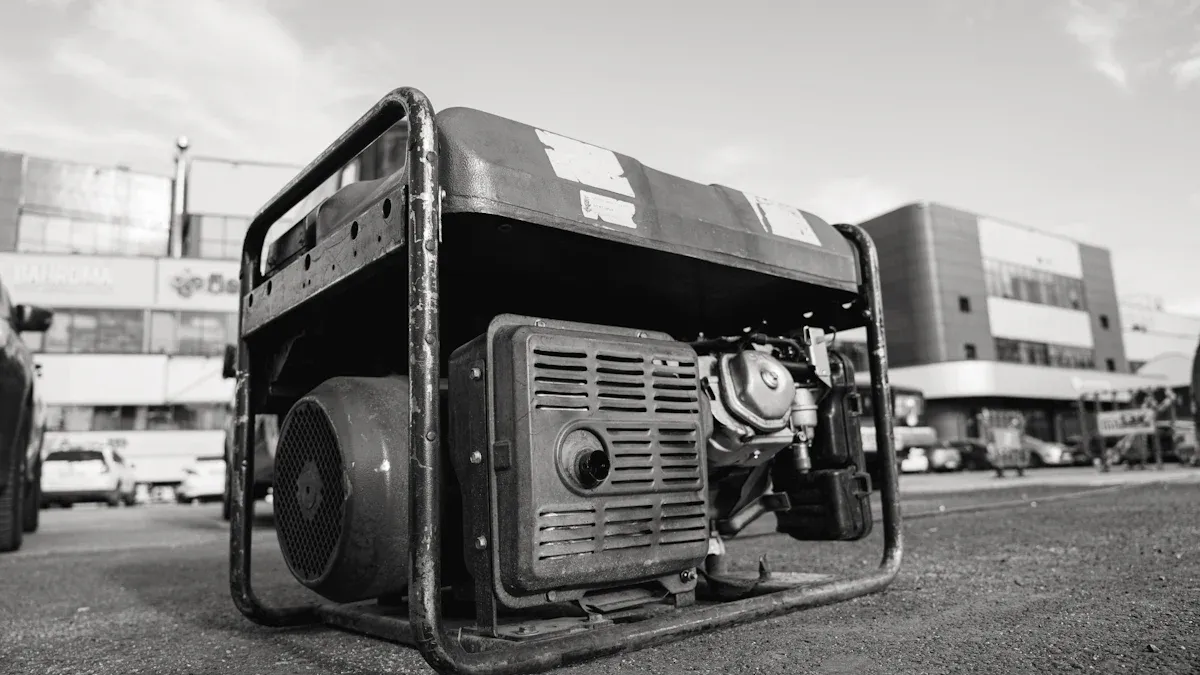
When I think about power, I often consider the immediate price tag. But with diesel generators, the initial cost is just the beginning. I've learned that you really need to look at the whole picture.
Initial Investment for a 3KW Generator
First, there's the upfront cost. For a decent 3KW diesel generator, I've seen prices typically range from about $1,500 to $4,000. This depends on the brand and features. It seems like a manageable amount at first glance. However, this is just the entry ticket to a much larger expense.
Fuel Consumption and Projected 2025 Costs
This is where the costs really start to add up. A 3KW diesel generator, running at a good load, can easily burn through 0.5 to 1 liter of diesel per hour. If I run it for, say, 8 hours a day, that's 4 to 8 liters daily. Looking ahead to 2025, I expect fuel prices to keep climbing. Let's estimate diesel at around $1.20 to $1.50 per liter. That means I could be spending anywhere from $4.80 to $12.00 every single day just on fuel. Over a year, that's a staggering $1,752 to $4,380! ⛽
Maintenance and Lifespan Considerations
Diesel generators need regular care. I'm talking about oil changes, filter replacements, and checking various components. These aren't free. I budget for these routine services. A well-maintained generator might last 5 to 10 years, but it often needs significant repairs or even replacement parts during that time. I know these costs can sneak up on you.
Hidden Costs of Diesel Power
Beyond the obvious, I've found some hidden costs.
- Noise Pollution: Generators are loud! I don't enjoy the constant hum.
- Exhaust Fumes: The smell and emissions are a concern for me and the environment.
- Fuel Storage: I need a safe place to store diesel, which adds another layer of planning and cost.
- Transportation: Getting fuel to my off-grid location can be a hassle and an extra expense.
- Depreciation: Generators lose value over time, just like a car.
These factors might not appear on a price tag, but they definitely impact my overall experience and budget.
💡 Tip: Always factor in the "total cost of ownership" when comparing power solutions. It's more than just the purchase price!
Off-Grid Solar Systems: The Economic Advantage
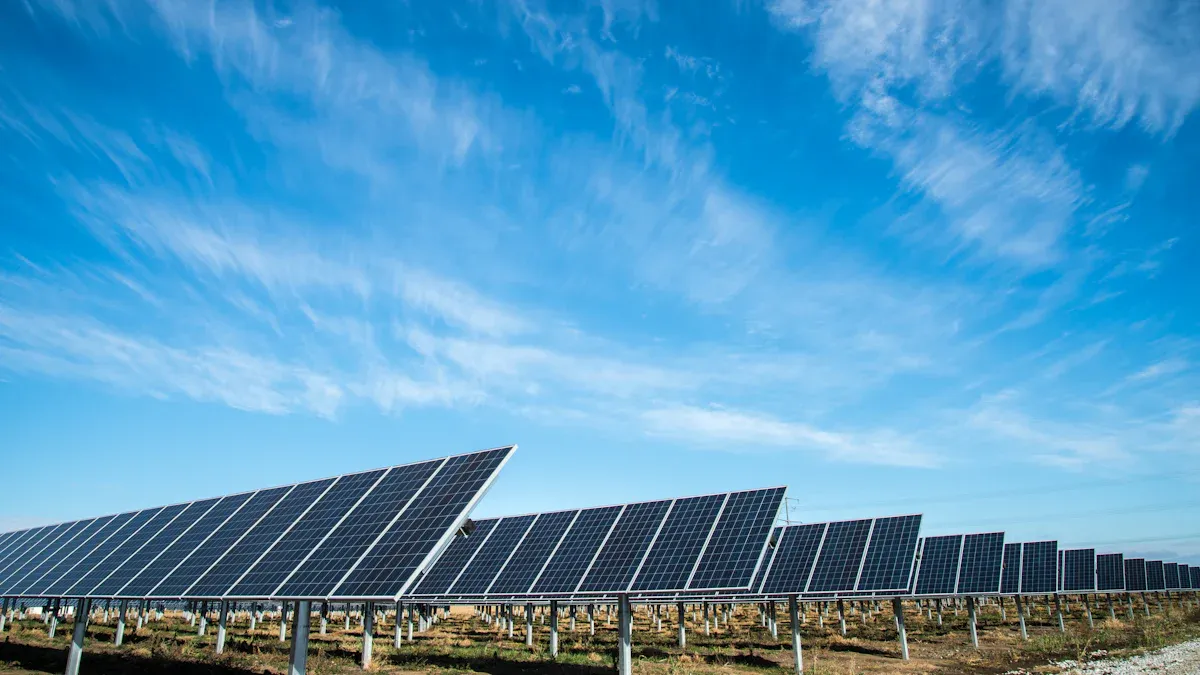
When I look at off-grid solar, I see a different kind of investment. It's an upfront commitment, yes, but it promises freedom from recurring costs. I find that very appealing.
Initial Investment for a 3KW Solar System
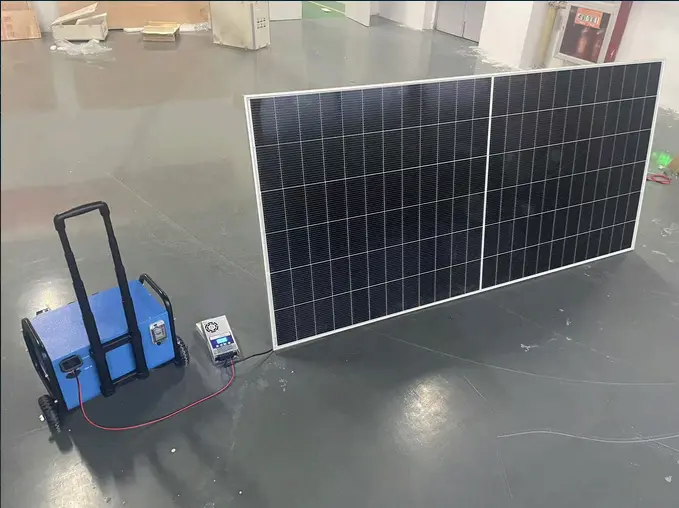
I know the initial cost of a 3KW off-grid solar system can seem higher than a diesel generator. For a complete setup, including solar panels, an inverter, a charge controller, and essential batteries, I've seen prices typically range from $6,000 to $12,000. This price depends on the quality of components and the battery type I choose. For example, lithium-ion batteries cost more upfront but last much longer. While this is a bigger initial outlay than a generator, I think about it as buying my fuel for the next 25 years all at once. ☀️
Zero Ongoing Fuel Costs
This is where solar truly shines for me. Once I install my solar panels, the sun provides my "fuel" for free, every single day. I don't have to worry about fluctuating diesel prices. I don't need to budget for weekly or monthly fuel purchases. This complete absence of ongoing fuel costs is a massive financial relief. It means my power bill effectively drops to zero for the energy generated by the sun. Imagine that!
Minimal Maintenance and Component Longevity
I find that solar systems are surprisingly low-maintenance. My main tasks involve keeping the panels clean from dust or debris. I might check battery terminals occasionally. That's about it for routine care. Solar panels themselves are incredibly durable. They often come with warranties guaranteeing performance for 20 to 25 years, sometimes even longer. Inverters and charge controllers might need replacement after 10-15 years. Batteries are the most variable component. Lead-acid batteries might last 5-7 years, but newer lithium-ion batteries can easily last 10-15 years or more. This longevity means fewer repair bills and less hassle for me over the long run.
🛠️ Tip: Regular, simple checks can extend the life of your solar components even further!
Solar's Return on Investment
I see off-grid solar as a smart investment that pays for itself. While the initial cost is higher, the savings on fuel and maintenance quickly add up. Over time, these savings will surpass the original purchase price. I essentially get free electricity for decades after the payback period. This means more money stays in my pocket. It's not just about saving money; it's about gaining financial predictability. I know my energy costs will be stable, unlike the rollercoaster of fuel prices.
Environmental and Reliability Benefits of an Off-Grid System
Beyond the financial benefits, I feel good about choosing solar. It produces clean energy. It doesn't create harmful emissions or noise pollution. This is a huge win for the environment and for my peace of mind. I also value the reliability of an off-grid system. Once installed, it provides consistent power, day after day, as long as the sun shines. I don't depend on external fuel deliveries or a fragile grid. This gives me true energy independence. It's a powerful feeling to know I generate my own electricity.
2025 Cost Analysis: Diesel vs. Solar Comparison
Now, let's get down to the numbers. I want to show you a direct comparison. We will look at the costs for both a 3KW diesel generator system and a 3KW off-grid solar system. I will break it down over different timeframes. This will help us see the real economic picture.
Short-Term Costs (1-5 Years)
In the first few years, the initial investment often dictates our choices. I know it did for me.
-
Diesel Generator (3KW):
- Initial Cost: I'm looking at about $1,500 to $4,000 for the generator itself.
- Fuel Costs (Year 1-5): If I run it 8 hours a day, I could spend $1,752 to $4,380 per year on fuel. Over five years, that's a staggering $8,760 to $21,900.
- Maintenance (Year 1-5): I budget around $200-$500 annually for oil changes, filters, and minor repairs. This adds up to $1,000 to $2,500 over five years.
- Total Short-Term Cost: I'm seeing a range of $11,260 to $28,400.
-
Off-Grid Solar System (3KW):
- Initial Cost: My upfront investment is higher, typically $6,000 to $12,000 for the entire system. This includes panels, inverter, charge controller, and batteries.
- Fuel Costs (Year 1-5): This is my favorite part: $0. The sun provides my energy for free.
- Maintenance (Year 1-5): I only need to clean the panels occasionally. I might spend $50-$100 per year on minor checks. That's $250 to $500 over five years.
- Total Short-Term Cost: My total cost remains $6,250 to $12,500.
💡 Tip: In the short term, solar's higher initial cost is offset by zero fuel expenses. Diesel looks cheaper upfront, but its running costs quickly add up.
Mid-Term Costs (5-15 Years)
This is where the differences really start to become clear. I see the long-term benefits of solar emerging.
-
Diesel Generator (3KW):
- Cumulative Short-Term Cost: We start from the $11,260 to $28,400 range.
- Additional Fuel Costs (Year 6-15): Another 10 years of fuel means $17,520 to $43,800.
- Additional Maintenance (Year 6-15): Another $2,000 to $5,000.
- Generator Replacement (around Year 10): I will likely need to buy a new generator. That's another $1,500 to $4,000.
- Total Mid-Term Cost: I'm looking at a grand total of $32,280 to $81,200. This is a significant amount of money.
-
Off-Grid Solar System (3KW):
- Cumulative Short-Term Cost: We start from $6,250 to $12,500.
- Fuel Costs (Year 6-15): Still $0. I love that!
- Additional Maintenance (Year 6-15): Another $500 to $1,000.
- Battery Replacement (around Year 7-10 for lead-acid, or Year 10-15 for lithium-ion): This is a major cost for solar. It can be $2,000 to $6,000 depending on the battery type and capacity.
- Inverter Replacement (around Year 10-15): An inverter might cost $1,000 to $2,000.
- Total Mid-Term Cost: My total cost could be $9,750 to $21,500.
📊 Observation: By the mid-term, solar's total cost is significantly lower. Even with battery and inverter replacements, it's far more economical than constantly fueling and maintaining a diesel generator.
Long-Term Costs (15-25 Years)
Over a quarter-century, the economic advantage of solar becomes undeniable. I see massive savings here.
-
Diesel Generator (3KW):
- Cumulative Mid-Term Cost: We start from $32,280 to $81,200.
- Additional Fuel Costs (Year 16-25): Another 10 years of fuel means $17,520 to $43,800.
- Additional Maintenance (Year 16-25): Another $2,000 to $5,000.
- Second Generator Replacement (around Year 20): I will likely need a third generator by now. That's another $1,500 to $4,000.
- Total Long-Term Cost: I'm looking at a staggering $53,300 to $134,000 over 25 years.
-
Off-Grid Solar System (3KW):
- Cumulative Mid-Term Cost: We start from $9,750 to $21,500.
- Fuel Costs (Year 16-25): Still $0. This is truly amazing.
- Additional Maintenance (Year 16-25): Another $500 to $1,000.
- Second Battery Replacement (around Year 20 for lead-acid, or not needed for long-life lithium-ion): This could be another $2,000 to $6,000.
- Total Long-Term Cost: My total cost could be $12,250 to $28,500.
🚀 Conclusion: Over 25 years, the solar system costs a fraction of what a diesel generator system would. The long-term savings are immense.
Key Financial Metrics: Cost Per kWh
I think the best way to compare these systems is by looking at the cost per kilowatt-hour (kWh). This tells me how much I pay for each unit of electricity I use.
Let's make some assumptions for a 3KW system over 25 years:
- Diesel Generator: Runs 8 hours/day, 3KW output = 24 kWh/day. Total kWh over 25 years = 219,000 kWh.
- Off-Grid Solar: A 3KW system might average 10-12 kWh/day (depending on sun hours). Let's use 11 kWh/day. Total kWh over 25 years = 100,375 kWh. (Note: Solar produces less total kWh because it only generates during daylight and varies with weather, but it's free energy).
| Metric | Diesel Generator (3KW) | Off-Grid Solar (3KW) |
|---|---|---|
| Total Cost (25 Years) | $53,300 - $134,000 | $12,250 - $28,500 |
| Total kWh Generated (25 Years) | 219,000 kWh | 100,375 kWh |
| Cost Per kWh | $0.24 - $0.61 per kWh | $0.12 - $0.28 per kWh |
I can clearly see the difference. Even with fewer total kWh generated, the cost per kWh for solar is significantly lower. This means I get my electricity at a much cheaper rate with solar. It's a clear winner for my wallet in the long run.
Making the Switch: Practical Off-Grid System Considerations
I've shown you the economic benefits of solar. Now, let's talk about how to actually make the switch. I think about a few key things when planning my own off-grid system.
System Sizing for Energy Needs
First, I need to know how much power I use. I always start by listing all my appliances. Then, I figure out how many watts each one uses and for how long. This helps me size my solar panels and battery bank correctly. I want enough power to run everything I need without wasting money on an oversized system. It's like buying the right size shoes; too big or too small just won't work.
Importance of Battery Technology
Batteries are the heart of any off-grid system. They store the sun's energy for when it's dark. I know there are different types, and choosing the right one is crucial.
| Characteristic | Lead Acid | LFP (Lithium-ion) | NMC (Lithium-ion) | NCA (Lithium-ion) |
|---|---|---|---|---|
| Nominal Voltage (V) | 2 | 3.2 | 3.6-3.7 | 3.6-3.7 |
| Specific Energy (Wh/kg) | 30-50 | 90-150 | 150-220 | 150-260 |
| Typical Charge Rate | 0.2C | 0.5C | 0.5C | 0.5C |
| Typical Discharge Rate | 0.1-0.5C | 1-2C | 1-2C | 1-2C |
| Cycle Life (100% DOD) | 200-300 | 1000-4000 | 500-2000 | 500-2000 |
| Thermal Runaway Temp (°C) | 100-150 | 270 | 210 | 150 |
| Comments | Plastic container softens or melts | Very safe even if fully charged | High charge promotes thermal runaway | High charge promotes thermal runaway |
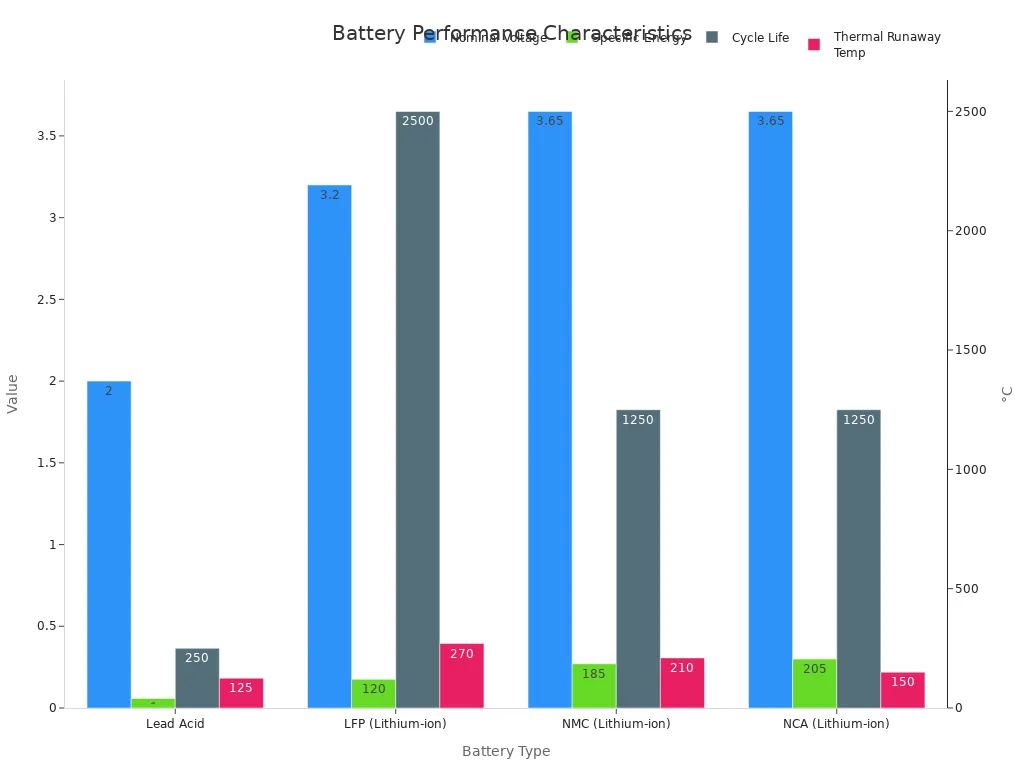
I see that lithium-ion batteries, like LFP, offer a much longer cycle life and higher energy density than lead-acid. Lead-acid batteries are cheaper upfront and widely available. They also work well in different temperatures. However, they don't like deep discharges. Lithium-ion batteries have become more affordable. They are very efficient. Flow batteries are another option. They last a very long time and are super safe. I think about my budget and how long I want the batteries to last.
Professional Installation and Support
I always recommend getting help from experts. Installing an off-grid system involves electrical work. It needs to be done safely and correctly. A professional installer ensures everything works right. They also help me get the most out of my investment. I want peace of mind knowing my system is reliable.
Incentives and Financing Options
I always look for ways to save money. Many governments offer incentives for solar power. These can be tax credits or rebates. I also check for financing options. Some companies offer loans specifically for solar installations. These can make the initial cost more manageable. It helps me make the switch without breaking the bank.
I've shown you that off-grid solar systems offer a clear economic advantage over diesel generators in 2025. My analysis proves the long-term operational savings and environmental benefits make solar the superior choice. I truly believe you should consider solar for sustainable, cost-effective off-grid power. It's a smart move!
FAQ
Is the initial cost of solar really worth it?
Yes, I believe so! My analysis shows solar's higher upfront cost quickly pays off. You save big on fuel and maintenance over time.
What if the sun doesn't shine? Will I lose power?
No, you won't! I use batteries to store energy. They power my home when it's cloudy or dark. It's very reliable.
How much work is it to maintain a solar system?
It's minimal, I find. I just clean the panels sometimes. Diesel generators need much more regular care and repairs.