
 Mobile Generator



Making Your Home Self-Sufficient with Off-Grid Photovoltaic Storage
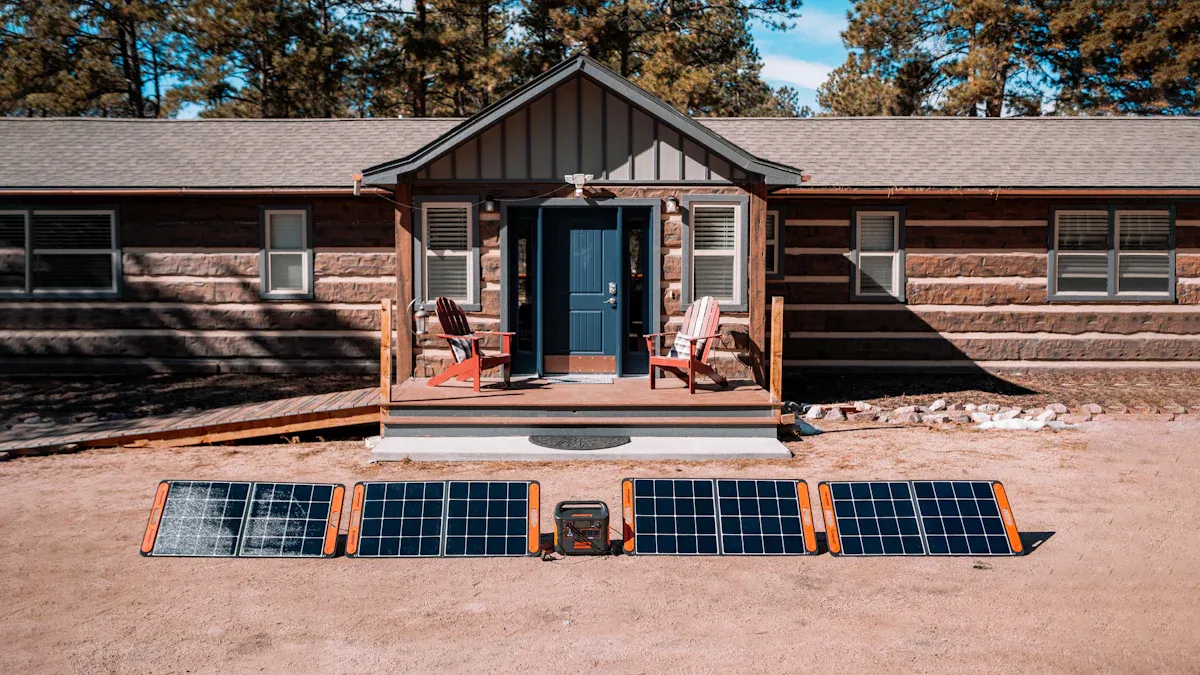
Off-Grid photovoltaic storage systems let homeowners generate and store their own electricity. These setups use batteries to capture extra solar power during the day, making it available at night or during outages. Studies show that in some optimized cases, households can cut grid reliance to less than 6%.
Key Takeaways
- Off-grid photovoltaic storage systems let homeowners generate and store their own solar energy, providing reliable power without relying on the public grid and reducing electricity bills.
- Choosing the right components—solar panels, inverters, and especially batteries like lithium iron phosphate—ensures efficient energy use, long battery life, and low maintenance for a self-sufficient home.
- Careful planning, including assessing energy needs, proper system sizing, and regular maintenance, helps homeowners achieve true energy independence and enjoy long-term savings and power security.
Off-Grid Photovoltaic Storage for Home Self-Sufficiency
What Is Off-Grid Photovoltaic Storage?
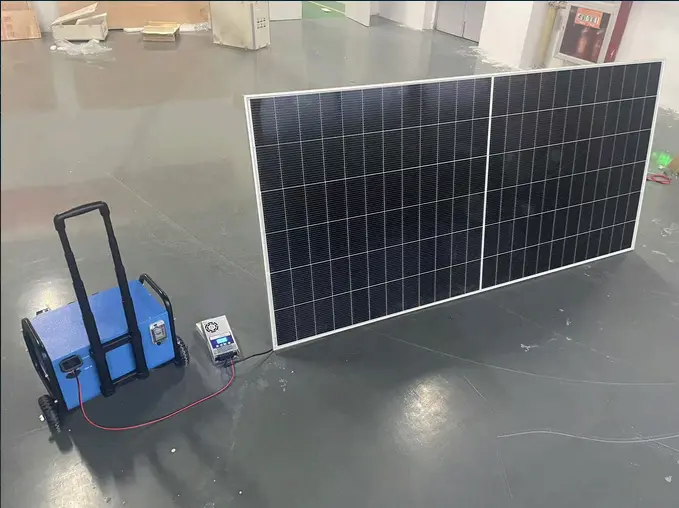
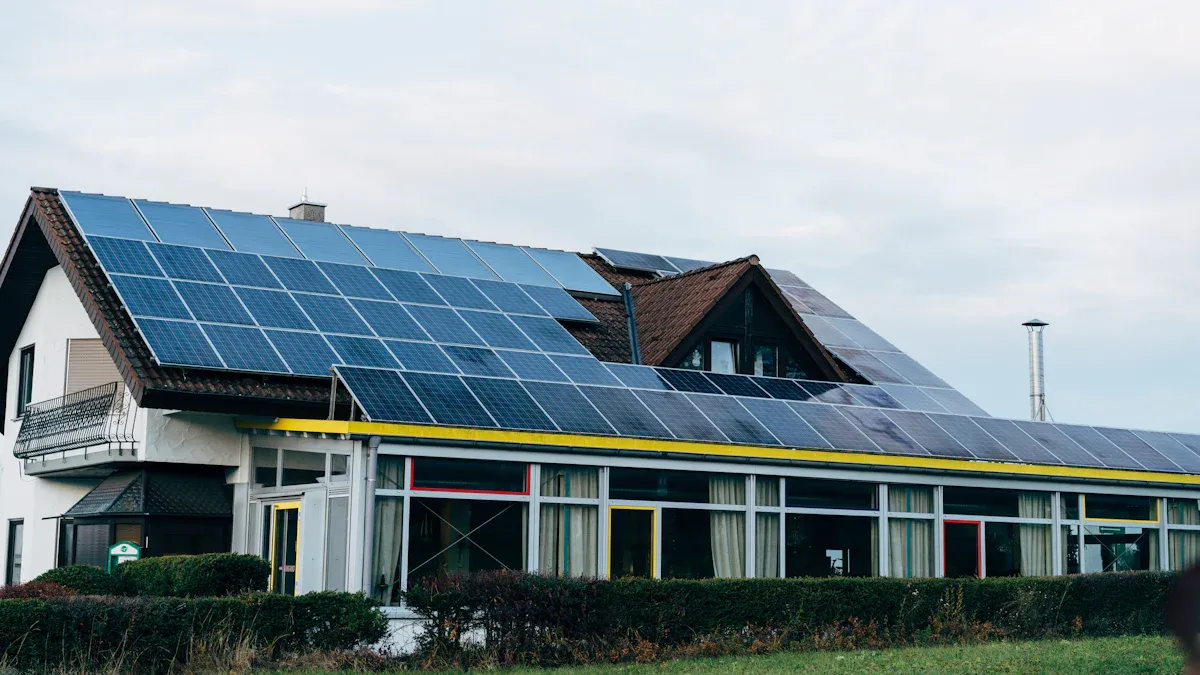
Off-grid photovoltaic storage allows a home to operate independently from the public utility grid. This system uses solar panels to capture sunlight and convert it into electricity. The electricity charges batteries, which store energy for use at night or during cloudy weather. Unlike grid-tied systems, off-grid setups do not rely on external power sources. They provide energy security and reduce dependence on fossil fuels. Many homeowners choose off-grid systems to achieve energy independence, lower their carbon footprint, and ensure power during outages.
Next-generation solar and battery technologies help homes become self-sufficient. Bifacial solar panels, building-integrated photovoltaics, and advanced batteries increase efficiency and lifespan. Smart home energy management systems use artificial intelligence to optimize energy use. These innovations make off-grid living more practical and affordable. Off-grid photovoltaic storage also supports community resilience by enabling microgrids and energy sharing.
Tip: Off-grid photovoltaic storage systems can reduce or eliminate electricity bills and provide reliable power even in remote locations.
A comparison between off-grid and grid-tied photovoltaic storage systems highlights their main differences:
| Aspect | Off-Grid Photovoltaic Storage System | Grid-Tied Photovoltaic Storage System |
|---|---|---|
| Grid Connection | Operates independently, no connection to public utility grid | Connected to the public utility grid |
| Key Components | Solar charge controller, battery bank, Off-Grid Inverter, backup generator (optional) | Grid-tie inverter or microinverters, power meter |
| Energy Source | Solely solar energy and stored battery power | Solar energy supplemented by grid power |
| Energy Storage | Battery bank required to store excess energy | Battery storage optional; excess energy can be fed back to grid (net metering) |
| Power Flow | Unidirectional: solar panels → battery → load | Bidirectional: solar panels ↔ grid ↔ load |
| Operation During Outage | Fully autonomous, unaffected by grid outages | Dependent on grid; no power during grid outage unless battery or backup present |
| Cost and Complexity | Higher initial investment, complex management due to autonomy | More cost-effective, simpler management but reliant on grid |
| Typical Use Cases | Remote areas, critical infrastructure, emergency scenarios | Urban/residential areas with grid access |
Essential Components: Solar Panels, Inverters, and Batteries
An off-grid photovoltaic storage system relies on three main components: solar panels, inverters, and batteries.
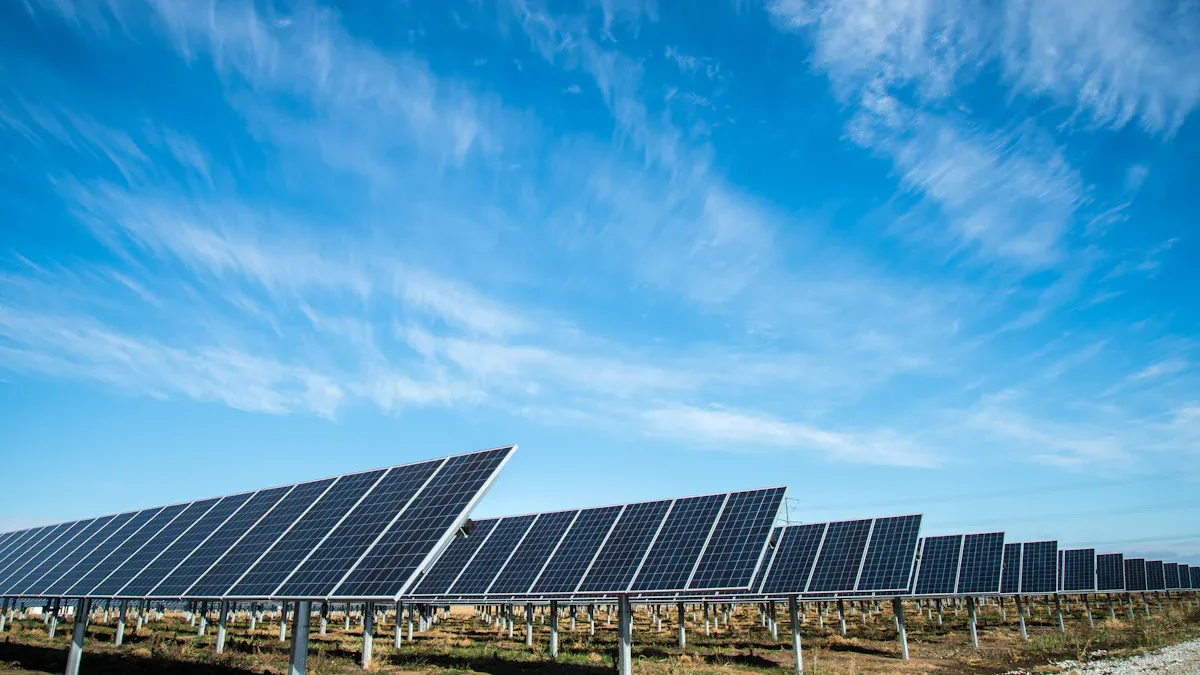
- Solar Panels: These devices capture sunlight and convert it into direct current (DC) electricity. Most residential solar panels produce between 250 and 400 watts, with an average output of about 300 watts per panel. For example, a typical home might use 14-15 panels to generate enough electricity for daily needs.
- Inverters:Inverters change the DC electricity from the panels and batteries into alternating current (AC) power, which most household appliances use. Off-grid inverters often include maximum power point tracking (MPPT) technology. MPPT helps the system harvest the most energy possible from the solar panels. Common inverter types used in off-grid systems have efficiency ratings between 95% and 98%. String Inverters, central inverters, and microinverters all offer high efficiency and reliable performance.
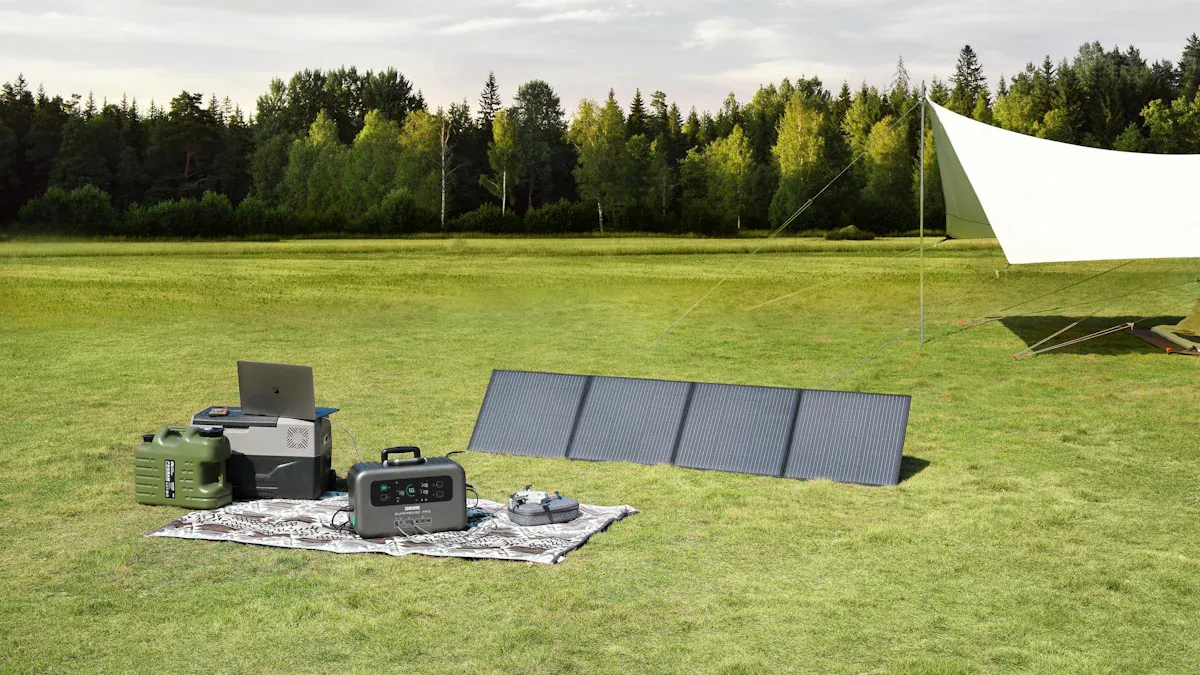
- Batteries: Batteries store excess electricity generated during sunny periods. The stored energy powers the home at night or during cloudy weather. Battery banks are essential for off-grid systems because they ensure a continuous power supply.
Note: Off-grid systems require careful planning to match the size of the solar array and battery bank to the household’s energy needs.
Types of Batteries for Off-Grid Systems
Choosing the right battery type is crucial for off-grid photovoltaic storage. The most common battery chemistries include lead-acid, lithium iron phosphate (LiFePO4), and lithium nickel manganese cobalt (NMC).
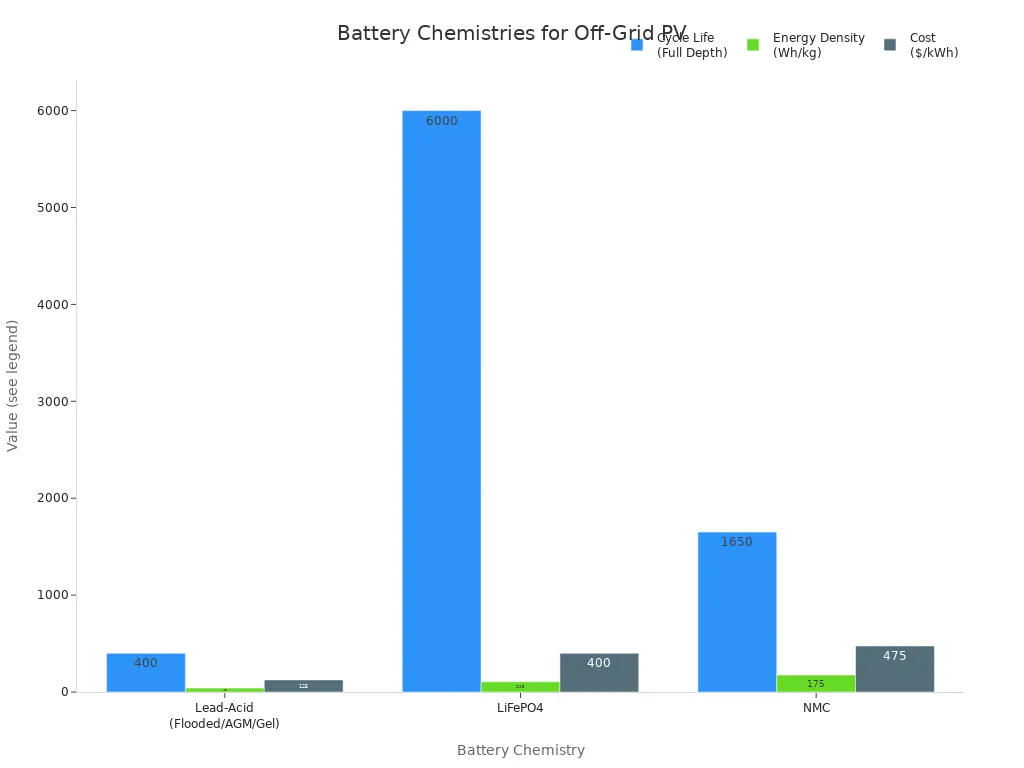
| Battery Chemistry | Cycle Life (Full Depth Cycles) | Depth of Discharge (DoD) | Energy Density (Wh/kg) | Maintenance | Cost ($/kWh) | Usage Notes |
|---|---|---|---|---|---|---|
| Lead-Acid (Flooded/AGM/Gel) | 300–500 | 50–60% | 30–50 | High (watering, equalizing) | 100–150 | Traditional, budget-friendly, heavy, limited cycle life, requires maintenance |
| Lithium Iron Phosphate (LiFePO4) | ~6000 | 80–90% | 90–120 | Low | 300–500 | Modern standard for off-grid solar, long life, lighter, safer, higher upfront cost |
| Lithium Nickel Manganese Cobalt (NMC) | 1000–2300 | ~80% | 150–200 | Low | 350–600 | High energy density, compact, shorter cycle life, chemical stability concerns |
Lead-acid batteries have served as the traditional choice for off-grid storage. They are affordable and widely available but require regular maintenance and have a shorter lifespan. Lithium iron phosphate (LiFePO4) batteries have become the modern standard for off-grid solar. They offer a much longer cycle life, higher usable capacity, and minimal maintenance. Although LiFePO4 batteries cost more upfront, they last longer and perform better in daily use. Lithium nickel manganese cobalt (NMC) batteries provide high energy density and compact size but have a shorter cycle life and higher cost.
Lithium-ion batteries, including LiFePO4 and NMC, outperform lead-acid batteries in several ways. They have higher efficiency (over 95%), longer lifespan (up to 10 years or more), and deeper discharge capability. They also require less maintenance and charge faster. These features make lithium-ion batteries ideal for off-grid applications where reliability and performance matter most.
Benefits, Challenges, and Getting Started with Off-Grid Systems
Energy Independence and Cost Savings
Off-Grid photovoltaic storage systems offer homeowners true energy independence. They eliminate monthly electricity bills and protect against rising grid prices. Over time, families benefit from predictable energy costs and reduced carbon footprints. Government incentives, such as the federal Residential Clean Energy Credit, can offset up to 30% of installation costs. Battery technologies like lithium iron phosphate provide long lifespans and low maintenance, further reducing replacement expenses.
- Off-Grid solar energy is free after installation, generating long-term savings.
- Tax credits and rebates lower the financial burden.
- Energy independence shields families from outages and price fluctuations.
System Sizing and Battery Lifespan
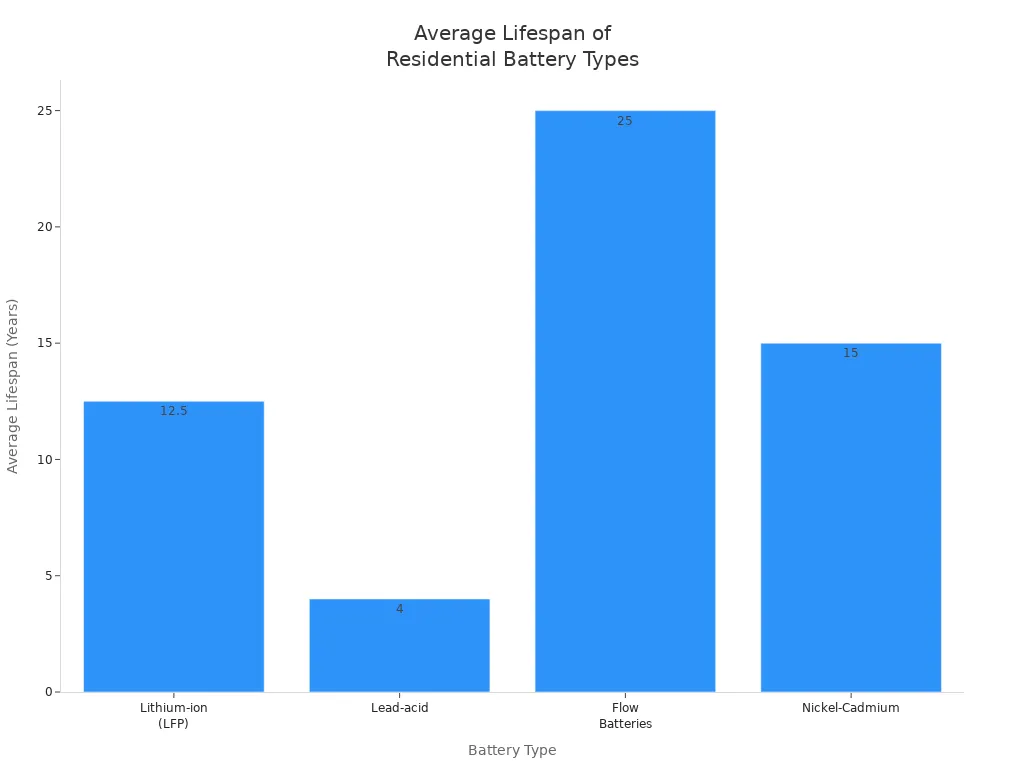
Proper system sizing ensures reliable power. Homeowners must analyze daily energy demand, peak loads, and available installation space. Battery capacity should cover nighttime and cloudy periods. Lithium-ion batteries, especially LFP types, last 10–15 years or more, while lead-acid batteries last 3–5 years. Depth of discharge, temperature, and maintenance affect battery longevity.
Upfront Costs and Maintenance
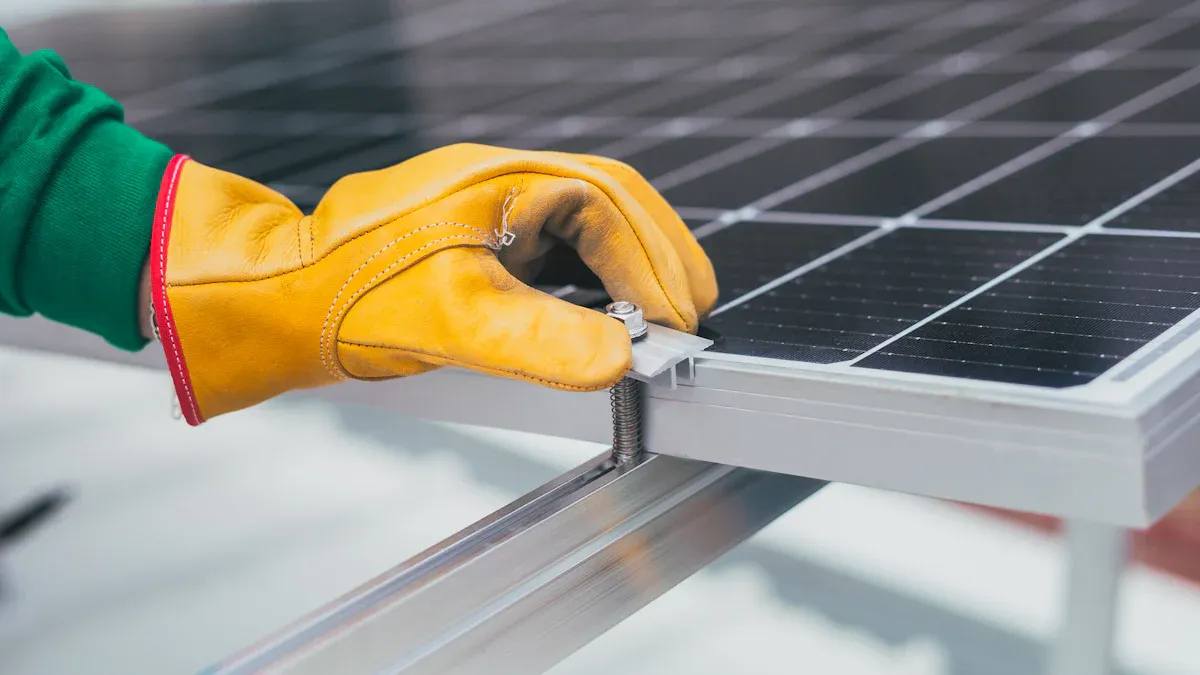
Initial investment for Off-Grid systems ranges from $15,000 to $70,000, depending on size and complexity. Federal tax credits can reduce costs by up to 30%. Regular maintenance includes panel cleaning, battery checks, and annual inspections. Batteries and inverters require replacement every 5–15 years. DIY installation may lower costs, but professional installation ensures safety and compliance.
Steps to Choose and Install Your Off-Grid System
- Assess energy needs and daily consumption.
- Select a site with optimal sunlight and minimal shading.
- Design the system with quality solar panels, batteries, and inverters.
- Choose reliable equipment and ensure compatibility.
- Install securely, following safety codes and best practices.
- Test and commission the system for proper operation.
- Maintain with routine inspections and cleaning.
Future Trends in Off-Grid Home Energy
Technological advancements continue to improve Off-Grid systems. Homeowners benefit from thin-film solar panels, smart inverters, and AI-powered energy management. Battery costs are declining, and new chemistries like solid-state and sodium-ion promise longer lifespans and better safety. The market is projected to grow rapidly, driven by environmental awareness and supportive government policies.
Homeowners who understand system components and challenges increase their chances of successful photovoltaic storage adoption. They avoid mistakes like poor site selection, incorrect system sizing, and neglecting maintenance. Careful planning, community involvement, and ongoing learning help families achieve reliable energy independence and move toward a self-sufficient lifestyle.
FAQ
How long do batteries in off-grid solar systems last?
Most lithium-ion batteries last 10–15 years. Lead-acid batteries usually last 3–5 years. Battery lifespan depends on usage, maintenance, and temperature.
Can off-grid solar systems power all household appliances?
Homeowners can run most appliances with a properly sized system. High-demand devices, like air conditioners, may require extra panels or larger batteries.
What maintenance does an off-grid photovoltaic system need?
- Clean solar panels regularly.
- Inspect batteries and inverters each year.
- Replace batteries and inverters as needed for optimal performance.