
 Mobile Generator




Off-Grid Solar Energy Systems Transforming Power Access,
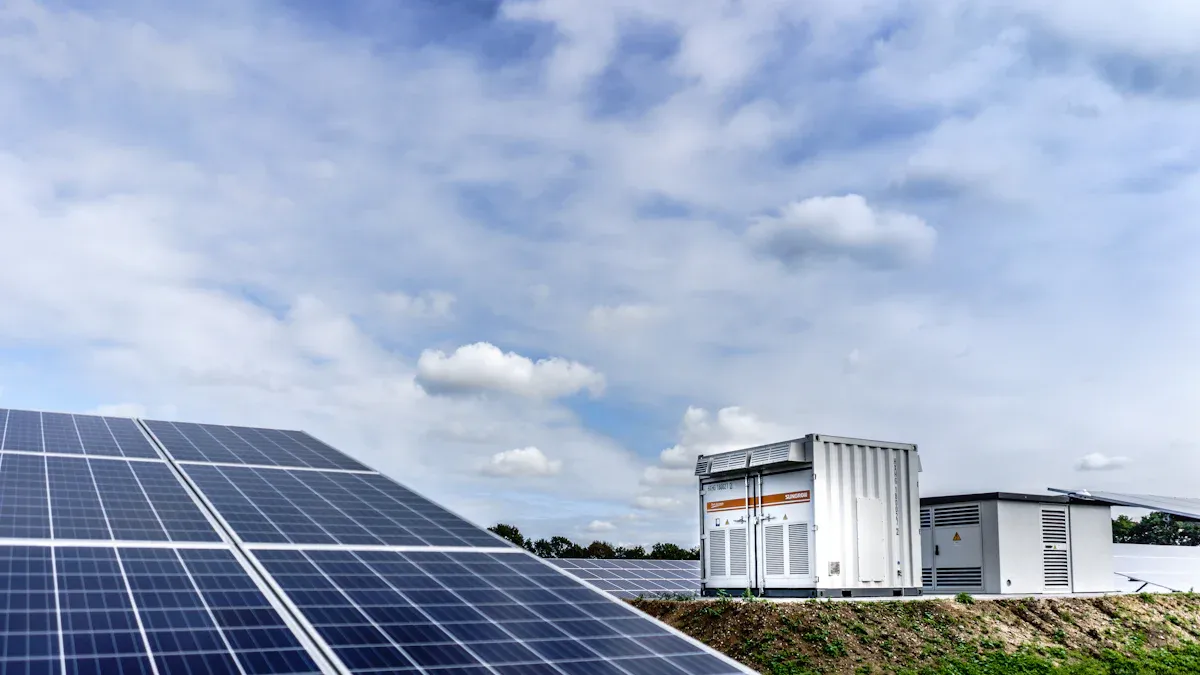
Off-grid solar-energy systems deliver reliable electricity and foster energy independence in remote communities. A Colombian project achieved 100% photovoltaic coverage for 2221 users, providing cost-effective power. In Ghana, households saw savings rise by 3.81%, and over 41% reported better nighttime security, highlighting improved economic resilience and quality of life.
| Indicator | Quantitative Measure | Impact Description |
|---|---|---|
| Increase in household savings | 3.81% | Economic resilience |
| Enhanced nighttime security | 41.59% | Improved safety and quality of life |
| Extended study hours for children | 28% | Better educational opportunities |
Key Takeaways
- Off-grid solar systems bring reliable, affordable electricity to remote communities, improving safety, education, and economic opportunities.
- Falling costs and supportive policies make solar energy more accessible, helping households and businesses become energy independent and reduce carbon emissions.
- Innovative financing and partnerships are key to overcoming upfront costs and regulatory challenges, ensuring sustainable growth of off-grid solar solutions worldwide.
How Off-Grid Solar-Energy Expands Access
Reaching Remote and Underserved Communities
Off-grid solar-energy systems play a vital role in bringing electricity to regions where traditional grid infrastructure remains impractical or too costly. In rural Rwanda, households demonstrate a strong willingness to invest in off-grid solar electricity, even though subsidies are often necessary to make these systems fully affordable. Studies show that off-grid solar solutions outperform grid extension policies in achieving mass electrification for rural populations. These systems reach last-mile users, providing reliable power where conventional grids cannot. The impact extends beyond electricity, supporting progress toward nearly all Sustainable Development Goals by improving water access, agriculture, education, and health. Transparent, open-source models for solar system design further enhance adaptability and cost-effectiveness, making it easier to meet the evolving needs of rural communities. By prioritizing investment and policy support for off-grid solar, governments and organizations can accelerate sustainable development and human well-being in underserved areas.
Empowering Households and Small Businesses
Globally, about 771 million people—mainly in remote and rural locations—live without access to reliable energy grids. Off-grid solar-energy systems offer a sustainable alternative, freeing households from dependence on unreliable grids and fossil fuels. These systems typically include solar panels, batteries, charge controllers, and inverters, enabling families to power lights, communication devices, and essential appliances. The benefits reach far beyond basic lighting. Children gain more study hours, healthcare improves through refrigeration of medicines, and small businesses can operate longer and more efficiently. Countries like Bangladesh and India have electrified millions of off-grid homes through solar home system programs, supported by falling technology costs and innovative financing models such as pay-as-you-go. International organizations, including the World Bank and African Development Bank, help accelerate these efforts. Off-grid solar solutions also support local entrepreneurship, such as solar-powered irrigation for agriculture, which boosts productivity and income. Advances in technology and financing continue to make solar-energy more accessible, empowering households and small businesses to thrive.
Supporting Critical Services and Infrastructure
Reliable electricity is essential for critical services, especially in remote locations. Off-grid solar systems have transformed the energy landscape for hospitals, clinics, and schools. For example, a 29-kW solar PV system installed at a hospital in Bangladesh supplies 98% of the facility’s power needs, reduces energy costs, and cuts carbon emissions by nearly 35 tons per year. In Nigeria, solar installations increased hospital power supply from 16 to 24 hours daily, while reducing monthly energy expenses and reliance on fossil fuel generators. Hybrid renewable systems, combining solar, wind, diesel, and battery storage, have proven both reliable and economically feasible for rural healthcare centers in countries like Nigeria and Ethiopia. These systems ensure that medical equipment remains operational during outages, safeguarding patient health. Surveys of engineers and managers confirm the cost-effectiveness and low maintenance of solar-energy solutions for small and medium institutions. Community hospitals report increased public patronage and improved service delivery after adopting solar power. Off-grid solar systems thus provide resilient, affordable, and sustainable energy for essential infrastructure in remote areas.
Solar-Energy Market Growth and Trends in 2025
Rising Global Demand for Clean Energy
The global appetite for clean energy continues to surge as countries seek to reduce carbon emissions and secure reliable power sources. Solar-energy stands at the forefront of this transition, driven by rapid urbanization, rising electricity demand, and international climate agreements. Market analysts project the solar energy sector will reach a value of $219.35 billion in 2025, with expectations to more than double by 2029. This growth reflects not only increased adoption in residential and commercial sectors but also the expansion of community solar programs and grid modernization efforts. Major companies such as Trina Solar, JinkoSolar, and Longi Green Energy Technology lead the competitive landscape, while advancements in solar panel technologies and digitalization further accelerate market expansion.
The solar-energy market's upward trajectory signals a pivotal shift toward sustainable power solutions worldwide.
Declining Costs and Improved Affordability
Solar-energy has become more accessible due to dramatic cost reductions over the past decades. In 1976, solar panels cost $106 per watt. By 2024, that figure dropped to less than $0.40 per watt, representing a reduction of over 99%. Utility-scale photovoltaic system costs fell from $5.79 per watt in 2010 to $0.89 per watt in 2024, an 85% decrease. These declines result from technological improvements, economies of scale, and supply chain optimization.
| Aspect | Data / Trend |
|---|---|
| Solar panel cost in 1976 | $106 per watt |
| Solar panel cost in 2024 | Less than $0.40 per watt (over 99% reduction) |
| Utility-scale PV system cost 2010 | $5.79/W |
| Utility-scale PV system cost 2024 | $0.89/W (85% reduction) |
| Solar learning rate | ~28.5% cost reduction per doubling of production |
| Residential soft costs | Often exceed 60% of total system cost |
Financial models now account for anticipated energy output, feed-in tariffs, and ongoing maintenance, making solar projects more attractive for investors and end users. Government grants, tax credits, and subsidies further reduce upfront costs, while the merit order effect of solar generation helps lower retail electricity prices. National labs and agencies, such as NREL and LBNL, provide annual reports and benchmarks that track these trends, supporting the case for continued investment in solar-energy.
Policy Support and Incentives
Government policies play a crucial role in shaping the solar-energy market. Regulatory bodies like the Federal Energy Regulatory Commission influence market conditions, while the Department of Energy’s Solar Energy Technologies Office funds research to improve affordability and reliability.
- Federal incentives, including those in the Inflation Reduction Act, offer bonus tax credits for solar installations on brownfields and in energy communities.
- State-level programs streamline permitting and provide financial incentives, boosting solar capacity on underutilized lands.
- Legislative acts such as the Infrastructure Investment and Jobs Act represent historic investments in clean energy deployment.
- Internationally, fiscal and regulatory tools—tax credits, feed-in tariffs, renewable portfolio standards, and subsidies—help overcome economic barriers and drive market growth.
A mix of policy portfolios has enabled countries like the United States, Germany, and Spain to expand their solar markets rapidly. Ongoing policy support remains essential for sustaining this momentum and ensuring solar-energy technologies remain competitive with conventional sources.
Investment and Financing Developments
Investment trends in the solar-energy sector reflect both opportunities and challenges. In 2024, global investment in off-grid solar fell by 30% year-on-year to just over $300 million, with start-up capital reaching its lowest point in five years. Despite this decline, scale-up investments remained stable, indicating sector maturity and a shift toward financial sustainability.
The World Bank’s Distributed Access through Renewable Energy Scale-up (DARES) project in Nigeria, with $300 million earmarked for off-grid solar, highlights the growing role of results-based financing. This approach ties investment returns to asset productivity, reducing risk and attracting commercial capital.
The off-grid solar sector provided 55% of new electricity connections in Sub-Saharan Africa between 2020 and 2022, underscoring its importance for energy access. However, an affordability gap of approximately $9 billion persists, emphasizing the need for innovative financing mechanisms and public subsidies.
Achieving universal electricity access by 2030 will require between $6.6 billion and $11 billion in additional financing, including investments in off-grid solar companies and public support to bridge affordability gaps.
Leading Solar-Energy Technologies and System Types
Solar Home Systems
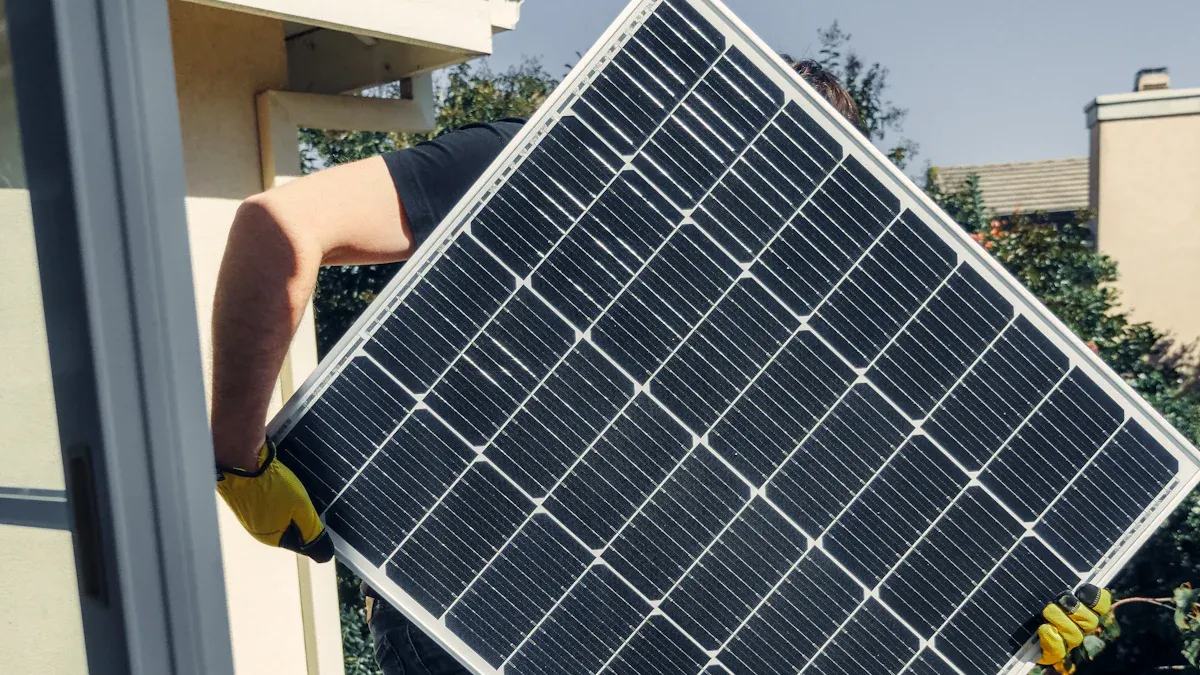
Solar home systems have become a cornerstone of off-grid electrification, especially in rural and underserved regions. Recent advancements include higher solar panel efficiency, improved battery storage, and smart home integration for real-time monitoring. Companies like Tesla and Sunrun lead the market with innovative products such as solar shingles and hybrid systems. Financing models like pay-as-you-go and micro-leasing make these systems more accessible, reducing upfront costs for users. Plug-and-play solar kits now simplify installation, while smart energy management systems enhance efficiency. These developments help families achieve energy independence and support broader electrification initiatives.
Market studies highlight that solar home systems now address both rural electrification needs and growing urban environmental awareness.
Mini-Grids and Microgrids
Mini-grids and microgrids deliver reliable power to entire communities, schools, and businesses in remote areas. Case studies from Namibia, including the Tsumkwe and Gam mini-grids, show that these systems can initially provide surplus power but face challenges as demand grows. Battery degradation, high temperatures, and maintenance issues can affect performance. Regular maintenance, community engagement, and adaptive management are essential for long-term sustainability. Experts recommend upgrading batteries, expanding capacity, and integrating hybrid energy sources to meet increasing demand and ensure reliable service.
- Key lessons from field evaluations:
- Monitor operational data closely.
- Plan for future demand growth.
- Invest in quality components and maintenance.
Portable and Mobile Solar Solutions
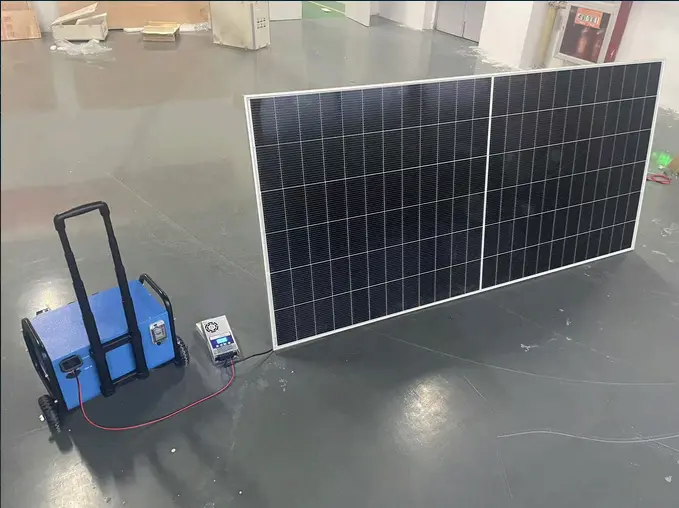
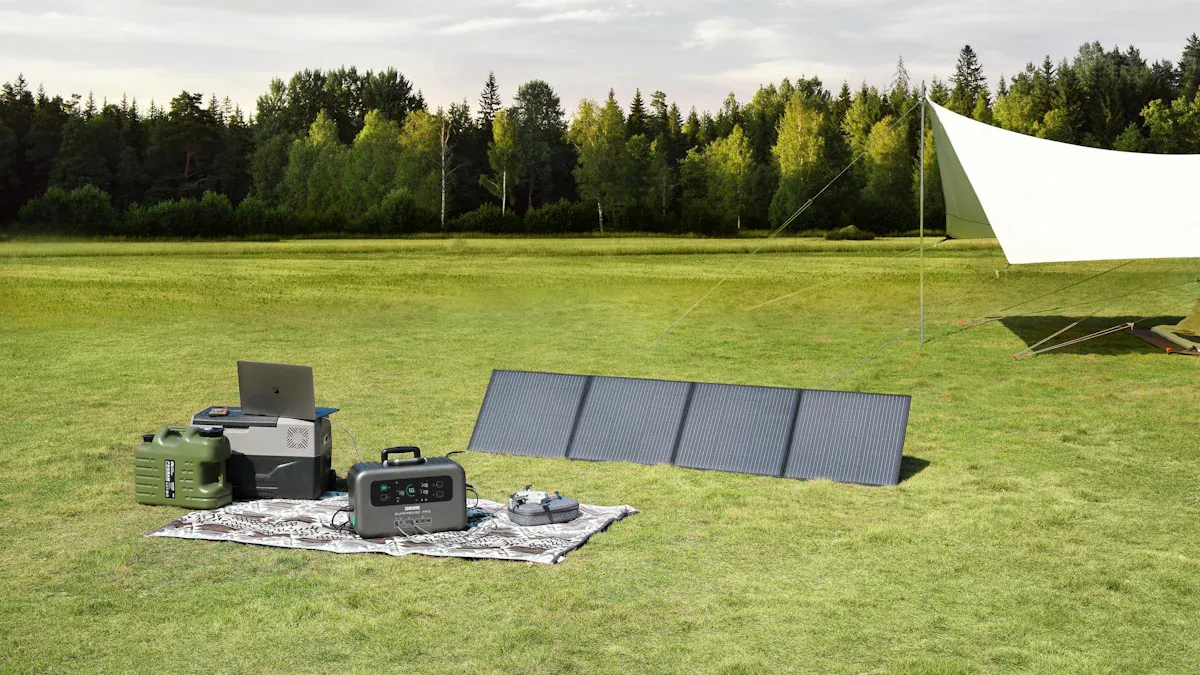
Portable solar solutions play a vital role in emergency scenarios and off-grid activities. Research demonstrates that dual storage systems, combining batteries and supercapacitors, ensure continuous operation of essential devices even during low sunlight or fluctuating weather. Outdoor tests confirm stable power for devices like laptops, exceeding the rated capacity of the panels. The market for portable solar panels is expanding, driven by frequent power outages, natural disasters, and the need for reliable off-grid power in military and industrial sectors. Disaster relief organizations increasingly invest in solar-powered emergency kits to improve resilience.
Key Components: Panels, Batteries, Inverters, Controllers
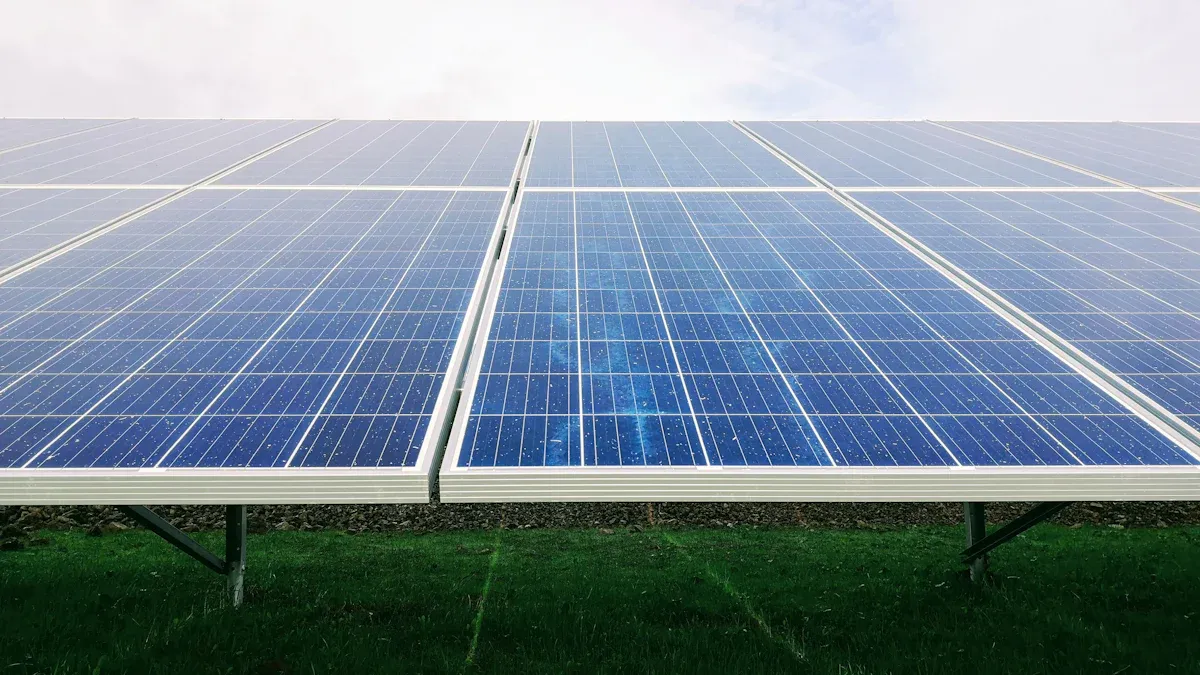
Every off-grid solar-energy system relies on four main components: solar panels, batteries, inverters, and controllers. Solar panels convert sunlight into electricity. Batteries store energy for use when sunlight is unavailable. Inverters change direct current (DC) from panels into alternating current (AC) for household appliances. Controllers regulate battery charging to prevent overcharging or deep discharge. Recent engineering reports highlight advances in lithium-ion batteries and MPPT charge controllers, which boost efficiency and reliability. However, quality assurance remains crucial, as some components still fall short of international standards. Stronger regulatory mechanisms and regular testing can ensure long-term system performance.
Main Applications of Off-Grid Solar-Energy
Residential Power Solutions
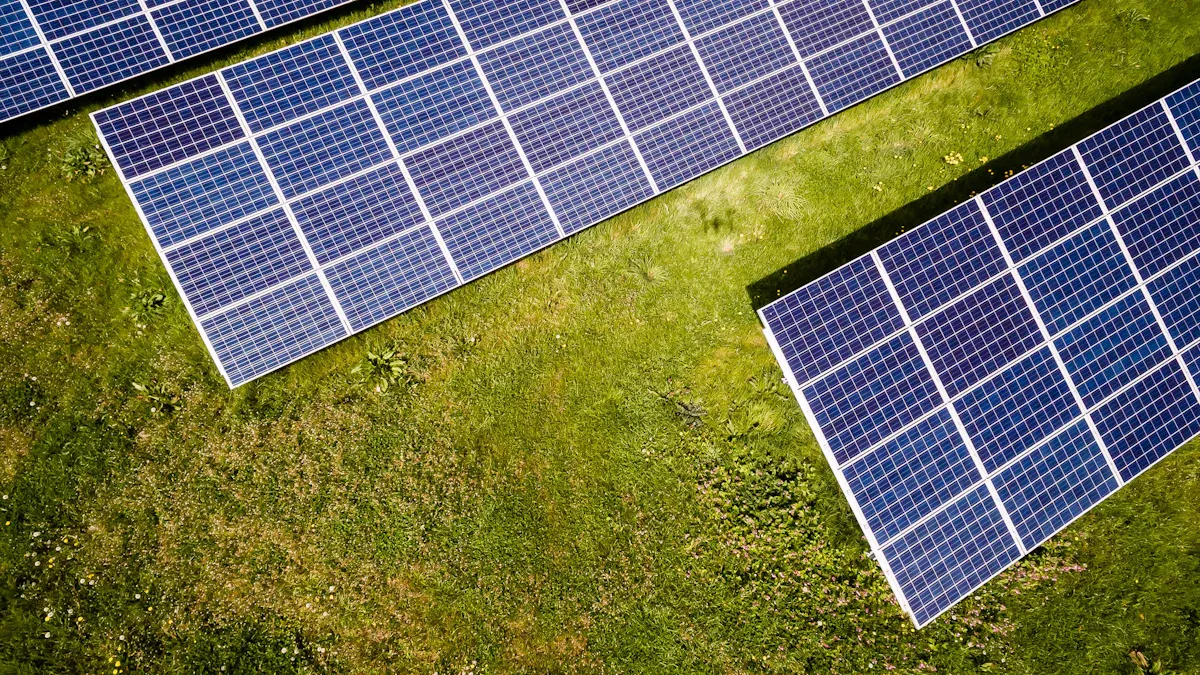
Off-grid solar systems have transformed residential energy access, especially in areas without reliable grid connections. K-Electric Ltd's off-grid solar system enables users to maximize electricity use and store surplus energy in batteries for later needs. This approach offers convenience, dependability, and cost-effectiveness. The buyback mechanism for surplus electricity supports both consumers and the utility sector, promoting energy independence and continuous power supply. In remote regions like Trinidad, solar PV systems have powered essential activities such as wildlife rehabilitation, even when grid access is impossible. Although challenges like lower solar irradiance and battery cycling exist, financial analysis confirms the economic feasibility of these systems. Solar adoption has improved illumination and increased the use of electronic appliances, though social disparities in access remain.
Commercial and Industrial Uses
Businesses and industries increasingly rely on off-grid solar solutions to reduce costs and ensure energy security. The following table summarizes key benefits and trends:
| Aspect | Evidence Summary |
|---|---|
| Commercial Sector Benefits | Off-grid solar systems reduce operational costs, enhance energy security, and improve brand image for businesses in remote locations such as hotels and offices. |
| Industrial Sector Benefits | Industries like mining and manufacturing use off-grid solar to replace diesel generators, reduce carbon emissions, and ensure uninterrupted operations. |
| Market Growth Drivers | Technological advancements, favorable government policies, financial incentives, and rising demand in remote/underserved areas drive adoption. |
| System Types | Commercial and industrial users prefer AC or hybrid off-grid solar systems due to higher power needs and complexity. |
| Power Rating Segments | Systems of 5-10 kW and above 10 kW cater to larger commercial and industrial applications, supporting significant energy loads. |
| Regional Growth Trends | Asia Pacific leads adoption due to energy demand and grid limitations; North America and Europe grow due to policies and environmental awareness. |
| Key Market Players | Companies like Schneider Electric and SMA Solar Technology offer comprehensive off-grid solar solutions for commercial and industrial sectors. |
Commercial solar PV panels now power offices, hotels, and hospitals in remote areas. The sector benefits from long system lifespans and growing demand, especially in regions with limited grid access.
Emergency and Disaster Relief
Off-grid solar systems play a crucial role during emergencies and disasters.
- After Hurricane Maria in Puerto Rico, solar power restored electricity to hospitals and water treatment facilities.
- In Nepal, portable solar generators provided immediate power to remote villages following an earthquake.
- During California wildfires, residential solar with battery backup allowed homeowners to maintain power during outages.
The portability and reliability of solar systems make them ideal for disaster response. Advances in storage and smart integration further enhance their effectiveness, ensuring critical services remain operational when conventional power fails.
Agricultural and Rural Electrification
Off-grid solar-energy drives rural development by powering farms and villages.
A review of electrification in Ghana shows rural access rose from 23% to 61% between 2006 and 2017, supporting economic growth and improved communication. Electrification links to reduced crime rates, better education outcomes, and increased teacher retention. In Senegal, studies found that electricity access led to higher school enrollment and attendance, especially for girls, and increased household spending on non-food items. Despite infrastructure challenges, solar solutions support agriculture, health, and education, helping rural communities thrive.
Regional Analysis: Where Solar-Energy Transformation Is Most Significant
Sub-Saharan Africa
Sub-Saharan Africa leads the world in off-grid electrification. Many countries in this region face challenges with grid extension due to vast distances and low population density. Studies show that solar photovoltaic systems offer a more affordable solution than diesel minigrids for at least 36% of unelectrified populations. The following table presents the levelized cost of energy (LCOE) for selected locations:
| Location | System Type | LCOE (USD/kWh) |
|---|---|---|
| Lower Manya Krobo, Ghana | Stand-alone HRES | 0.174 |
| Mamfe, Cameroon | Stand-alone HRES | 0.143 |
| Lower Manya Krobo, Ghana | Grid-tied HRES | 0.01 |
| Mamfe, Cameroon | Grid-tied HRES | 0.0281 |
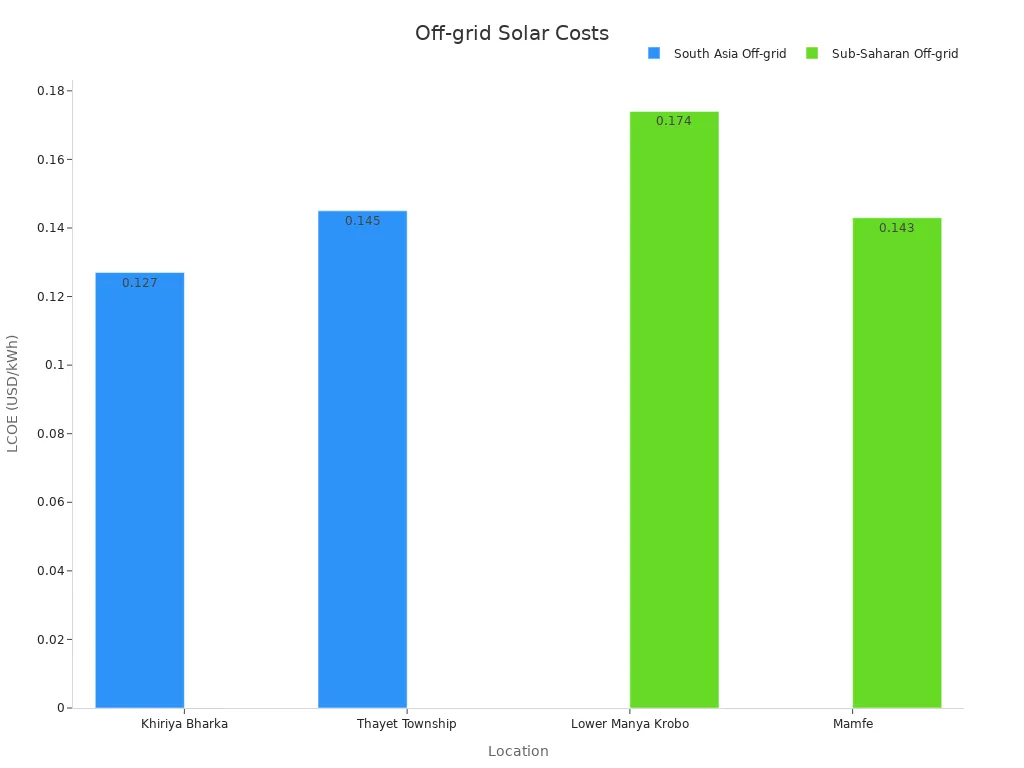
High-resolution affordability maps help governments and organizations target investments where they have the greatest impact. These data-driven strategies support electrification and economic growth across the region.
South and Southeast Asia
South and Southeast Asia have experienced rapid growth in off-grid solar adoption. In rural areas, off-grid photovoltaic systems have increased electricity access and improved agricultural productivity. A recent study in South Asia used advanced statistical methods to confirm that solar PV adoption leads to higher agricultural value added per worker. The analysis also highlights cost advantages over diesel-based systems. For example, in India and Myanmar, stand-alone hybrid renewable energy systems (HRES) show LCOEs of $0.127 and $0.145 per kWh, respectively. Grid-tied systems in these countries achieve even lower costs, as shown in the table above. These results demonstrate the transformative effect of off-grid solar on rural development and economic opportunity.
Latin America and the Caribbean
Latin America and the Caribbean have made significant progress through regional cooperation and targeted investments.
- The Inter-American Development Bank has supported regulatory frameworks and mini-grid projects in countries such as Barbados, Bahamas, Bolivia, Haiti, Nicaragua, and Suriname.
- Financing in the Bahamas and Nicaragua has enabled energy storage and resilient mini-grid installations.
- Technical cooperation in Uruguay and consultancy in Barbados have advanced battery integration and feed-in tariff design.
- National Renewable Energy Laboratory (NREL) studies in Honduras and Haiti have evaluated off-grid solutions for healthcare, education, and livelihoods.
- Capacity building and university curricula have strengthened local expertise in off-grid solar technologies.
These efforts have improved energy access, stabilized networks, and supported sustainable development across the region.
Middle East and North Africa
The Middle East and North Africa (MENA) region has set ambitious renewable energy targets. Governments in Morocco and North African countries have adopted policies to increase solar and wind power generation. Regional studies simulate scenarios for 100% renewable electricity and water desalination, highlighting the energy-water nexus. The region focuses on grid interconnections and renewable electricity trade, especially between Morocco, Algeria, Libya, and Spain. Policy strategies address financing challenges and encourage private investment. Technical and economic modeling supports the integration of renewables, while regional cooperation frameworks promote social acceptance and infrastructure development. These initiatives position MENA as a leader in solar transformation and decarbonization.
Challenges and Solutions in Off-Grid Solar-Energy
Upfront Costs and Financing Barriers
High upfront costs remain a significant obstacle for off-grid solar adoption. Residential systems can cost around $25,000, while commercial installations may reach $2 million. Many households and small businesses lack the resources or credit to cover these expenses. Financial barriers also include uncertain returns and long payback periods. Existing subsidies and incentives often fall short or are poorly communicated. Innovative financing models, such as leasing, rent-to-own, and power purchase agreements, help reduce initial costs. These options allow customers to access solar without large upfront payments. Policy recommendations suggest increasing grants, offering low-interest loans, and streamlining administrative processes. Community engagement and technical support, as seen in projects across Tampa Bay and Atlanta, further lower adoption barriers.
- Key strategies to address cost barriers:
- Expand subsidies and grants for low- and middle-income users.
- Develop one-stop service centers for easier access to incentives.
- Promote awareness campaigns and technical assistance.
Regulatory and Policy Hurdles
Regulatory barriers present some of the most challenging obstacles to off-grid solar deployment. In West Africa, unclear frameworks for mini-grids, lack of standards, and rigid tariff policies limit private sector participation. Bureaucratic delays in licensing and permitting can add significant costs, sometimes exceeding 10% of project capital. Political pressures and the absence of dedicated renewable energy authorities further slow progress. Research confirms that these regulatory issues increase project costs, deter investment, and reduce investor confidence. Effective policy implementation requires clear standards, streamlined processes, and independent regulatory bodies.
Supply Chain and Logistics Issues
Supply chain disruptions have increased by 30% in early 2024, affecting the delivery and cost of off-grid solar systems. Rising material prices, labor shortages, and extreme weather events create delays and threaten project viability. Logistics inefficiencies, such as unpredictable lead times and transportation bottlenecks, further complicate deployment. Many companies struggle with limited data visibility beyond first-tier suppliers, making it difficult to assess performance and energy efficiency. Standardization gaps and regulatory delays add to these challenges. Digitalization and supplier diversification emerge as critical strategies for building resilient supply chains.
- Common supply chain challenges:
- Raw material shortages and manufacturing delays
- Increased labor and transportation costs
- Need for investment in digital supply chain solutions
Innovations and Strategic Partnerships
Innovative solutions and strategic partnerships drive progress in overcoming off-grid solar challenges. The Loiyangalani Solar Microgrid in Kenya demonstrates how public-private partnerships can deliver reliable electricity to rural communities. In California, the Sonoma Clean Power Microgrid shows the value of collaboration among governments, utilities, and technology firms. The Brooklyn Microgrid in New York highlights the potential of peer-to-peer energy trading and community involvement. Large-scale programs in Bangladesh and Kenya use diverse business models and public co-financing to expand access. Energy storage systems, smart technologies, and creative financing models further enhance system resilience and scalability.
Strategic partnerships and innovation remain essential for addressing technical, financial, and regulatory barriers in the off-grid solar sector.
Off-grid solar-energy systems reshape global energy access by making electricity more sustainable and widely available. Reports show that each megawatt hour of solar electricity reduces about 0.5 tons of CO2 emissions. Advancements in photovoltaic technology, supportive policies, and increased investment drive rapid market growth and help achieve energy equity worldwide.
FAQ
What is an off-grid solar-energy system?
An off-grid solar-energy system operates independently from the main power grid. It uses solar panels, batteries, and inverters to supply electricity directly to homes or businesses.
How long do off-grid solar batteries typically last?
Most off-grid solar batteries last between 5 and 15 years. Battery lifespan depends on usage patterns, maintenance, and environmental conditions.
Can off-grid solar systems power large appliances?
Off-grid solar systems can power large appliances if designed with sufficient capacity. Users should calculate total energy needs before selecting system size and components.